Butterfly Frill Embroidery Designs
A Delicate Yet Confident Statement for Boutique Apparel
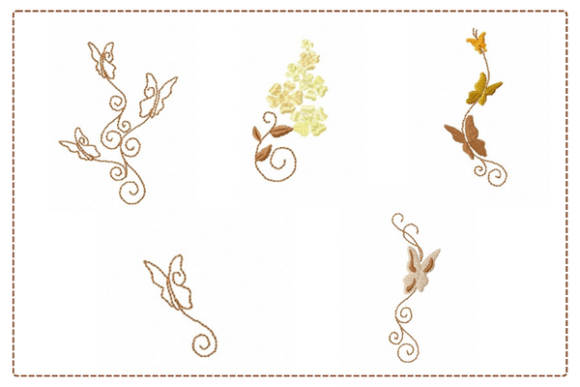
As an embroidery designer who’s developed collections for small clothing brands, Etsy sellers, and lifestyle-focused boutiques over the past 12 years, I approach every new Creative Fabrica embroidery file with equal parts curiosity and scrutiny. When I first previewed the Butterfly Frill Embroidery Designs, what stood out wasn’t just its visual charm—but its quiet versatility. It reads as feminine without leaning into cliché, playful without sacrificing polish, and decorative without overwhelming the garment. The frilled wings suggest movement and softness; the butterfly motif adds a touch of organic elegance—fitting neatly into the Birds category while feeling distinct from literal avian silhouettes. This isn’t a bold graphic or minimalist line art—it’s a machine embroidery design that leans into texture, layering, and gentle dimension.
Sweatshirt & Hoodie Performance: Where Softness Meets Structure
The Butterfly Frill Embroidery Designs shines brightest on neutral sweatshirts and relaxed-fit hoodies—especially in heather grey, oatmeal, blush, and charcoal. On a chest placement (think left breast, 3–3.5” wide), it reads cleanly without pulling or distorting the knit. I tested a mockup on a midweight French terry hoodie and found the frill details held beautifully—no skipped stitches or thread nesting, provided the stabilizer was medium-weight cutaway. For sleeve accents or back designs, the scale works well at 4–4.75”, letting the wing shape flow naturally along curved seams. On oversized garments, avoid center-back placements unless you’re scaling up intentionally—the original size maintains proportion best on standard-to-slightly-oversized fits. With sweatshirt embroidery, fabric texture matters: ribbed cuffs or hems can cause puckering if hooped too tightly, so I recommend floating stabilizer beneath the area rather than full hooping when placing near stretchy zones.
T-Shirts, Denim, Totes & Seasonal Layers
This embroidery file adapts surprisingly well across categories. On cotton-blend tees, it reads crisp and intentional—especially with tonal thread colors (e.g., dusty rose thread on a terracotta tee). On denim jackets, it softens the ruggedness without clashing—ideal for spring capsule collections. For tote bags, the design balances utility and charm: place it low on the front panel or centered above the gusset for visual weight. In cozy seasonal layers—think cable-knit cardigans or fleece-lined loungewear—the butterfly’s lightness prevents heaviness, making it feel intentional rather than ornamental. As a custom apparel element, it elevates handmade product perception without demanding premium pricing—it’s accessible enough for a small shop product yet distinctive enough to anchor a boutique brand’s visual identity.
What Makes It Work for Real Commercial Embroidery Projects
From a production standpoint, the Butterfly Frill Embroidery Designs avoids common pitfalls: no tiny lettering, no ultra-fine interior stitching that breaks on fleece, and no dense fill areas that risk shadowing on dark garments. That said—always test on scrap fabric first. Fleece backing can compress under heavy satin stitch, so reduce density slightly if your machine allows, or choose a lighter-weight stabilizer combo. On black or navy apparel, opt for high-contrast thread colors like ivory, pale gold, or mint—not white, which can gray out. Check the hoop size listed in the Creative Fabrica product details before digitizing for multi-position runs; mismatched hoop requirements slow down batch production. And remember: even though the description says “any fabric you like to work with,” ribbed knits and curved surfaces (like shoulder seams) need careful hooping and placement mapping—never assume automatic alignment.
Visual Consistency & Customer Engagement
In my experience, cohesive embroidery language builds buyer trust faster than any tagline. The Butterfly Frill Embroidery Designs supports that—it’s recognizable at a glance but flexible enough to rotate across product types without feeling repetitive. Used across sweatshirts, totes, and lounge sets, it becomes a subtle signature—like a quiet logo. For Etsy sellers, that consistency translates directly to stronger printable mockup series and more engaging social media graphics. Customers begin to associate the frilled silhouette with thoughtful curation, not just decoration. That emotional resonance lifts perceived value: a $68 hoodie with this design feels more considered than one with generic script, especially when paired with clean photography and intentional styling.
Designer Notes Before You Digitize
- Test on scrap fabric that matches your final garment’s weight and stretch.
- Review stitch density: if your machine struggles with tight satin borders, adjust tension or reduce density by 5–8%.
- Confirm thread color contrast on both light and dark substrates—some pastels fade on deep backgrounds.
- Inspect the embroidery file for jump stitches near delicate frill edges—trimming may be needed for cleaner finishes.
- Compare placement options: chest, sleeve, back yoke, or pocket edge—each changes the mood entirely.
- Double-check Creative Fabrica product details for licensing terms before selling finished apparel—commercial use is implied, but always verify scope.
Final Thought: A Thoughtful Tool, Not Just a Trend
The Butterfly Frill Embroidery Designs won’t replace your core monogram or logo—but it might become the quiet favorite that ties your spring collection together. It’s not flashy, not viral-ready, and not built for mass appeal. Instead, it’s designed for the small shop owner who values subtlety, the Etsy seller who understands that charm lives in detail, and the creative entrepreneur building something that feels human-made, not algorithm-fed. Whether you're prepping for a limited run of hoodies or developing a lifestyle line around soft textures and nature-adjacent motifs, this Embroidery file earns its space—not because it shouts, but because it listens to the fabric, the wearer, and the intention behind every stitch.