Christmas Penguin Embroidery Designs
A Designer’s First Look: Whimsy with Purpose
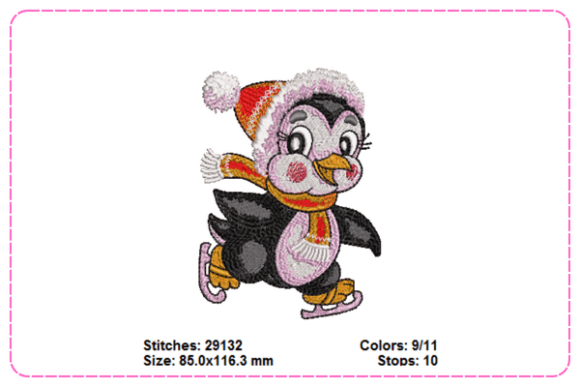
When I opened the Christmas Penguin Embroidery Designs file, what struck me first wasn’t just the charm—it was the intentionality. This isn’t a cartoonish penguin slapped onto a snowflake background. It’s a balanced, cohesive machine embroidery design where posture, proportion, and negative space all work together. The penguin stands upright but relaxed, flippers gently curved, scarf flowing just enough to suggest motion without overwhelming the shape. There’s subtle texture in the beak and feet—done with fine satin stitch—not overworked, not underdefined. It feels like something you’d confidently stitch on a boutique apron or a baby onesie and know it would read clearly at arm’s length.
Where It Lives Best: Real Projects, Real Customers
Last week, I prepped a small batch of holiday-themed tote bags for a local craft fair—cotton canvas, medium weight, unbleached. I stitched the Christmas Penguin Embroidery Designs onto the lower right corner, about 3.5 inches tall. On that fabric, with a light tear-away stabilizer and 40-weight polyester thread, the design held its shape beautifully. No puckering, no distortion. Customers paused. Smiled. Asked, “Is that hand-drawn?” That’s the sign of strong embroidery design: it reads as handmade, not machine-made—and that builds trust.
It also translated well onto a soft French terry sweatshirt (medium-density fill stitch, cutaway stabilizer). The penguin’s outline stayed crisp, and the scarf’s gentle curve didn’t collapse into a blob—thanks to thoughtful stitch direction and moderate stitch density. For Etsy sellers listing personalized gifts, this design fits naturally on tea towels, pillow covers, and even reversible baby blankets where one side is the penguin, the other a simple snowflake motif.
Where to Pause—and Why
Don’t rush this into tight spaces. The Christmas Penguin Embroidery Designs includes delicate scarf ends and defined eye detail—both rely on clean running stitch and precise satin edges. On a curved cap front or a narrow cuff, those elements can shear or blur unless you adjust placement and hoop size carefully. Likewise, avoid using it full-size on ultra-thin cotton poplin or stretchy jersey without testing: the fill areas need stable ground, and the design doesn’t include built-in underlay for high-stretch substrates.
Dark fabrics demand attention here. The original thread palette assumes contrast—cream scarf on black fabric reads warmly, but if you swap to navy thread on navy fabric, the scarf disappears. Always test your thread colors on scrap first. And if you’re planning layered items (like an embroidered patch sewn onto a denim jacket), confirm the design’s outer edge has clean, non-fraying satin borders—not just raw fill stitch.
What It Adds to Your Finished Product
This isn’t just decoration—it’s value signaling. A customer buying a custom-embroidered kitchen towel with the Christmas Penguin Embroidery Designs expects quality, and the design delivers it visually: balanced weight, clear hierarchy, and holiday warmth without cliché. That perception lifts perceived value, supports premium pricing, and reinforces brand consistency—especially for small shop owners building a recognizable seasonal line.
For digital product sellers, it works cleanly in printable mockups. The silhouette is distinct enough to read in grayscale previews, and the proportions scale predictably from 2.5" to 5". That matters when customers are browsing Etsy listings on mobile—they need to recognize charm instantly.
Practical Notes Every Embroidery Designer Should Run Through
- Always test on scrap fabric—especially with textured weaves or blends. What looks sharp in the preview file may soften on linen or fleece.
- Check stitch density before stitching on baby items or lightweight garments. Dense fills trap heat and stiffen fabric; if the design runs hot on your machine, consider reducing density slightly in fill areas.
- Confirm hoop size early. If your smallest hoop is 4x4", verify the design fits comfortably within that frame—including any jump stitches or travel moves.
- Inspect small details at actual stitch-out size: the eye, beak tip, and scarf fringe should resolve cleanly, not merge into fuzz.
- Test black-and-white mockups to gauge contrast on light and dark backgrounds—this reveals where thread color choices make or break legibility.
- Match stabilizer to fabric, not just project type. A structured tote bag might need medium-weight cutaway; a gauzy tea towel needs lightweight tear-away plus a touch of spray adhesive.
- Review licensing terms before selling finished products or bundling the embroidery file in digital kits. Commercial use isn’t automatic—even with “exquisite” designs.
Final Thought: Not Just Festive—Functional
The Christmas Penguin Embroidery Designs earns its place because it bridges mood and mechanics. It’s joyful without being juvenile, detailed without being fussy, and seasonal without locking you into one aesthetic. Whether you’re stitching holiday gifts for clients, building a small-batch craft business, or adding consistent branding to your Etsy shop, this design supports your goals—not the other way around. It doesn’t shout. It invites. And in embroidery, that quiet confidence is what makes people reach out and touch the fabric.