Labrador Embroidery: A Craft Fair Designer’s Honest Review
First Impression: Minimal, Warm, and Instantly Recognizable
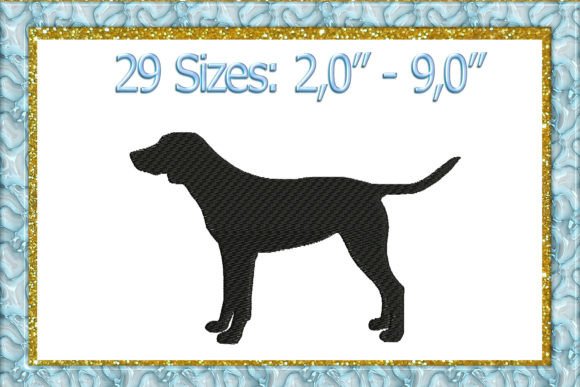
As an embroidery designer who’s stitched over 300 craft fair booths—from snowy Vermont markets to sun-drenched California pop-ups—I opened Labrador Embroidery expecting simplicity. What I found was exactly that: a clean, confident dog silhouette with unmistakable Labrador shape—rounded head, gentle slope of muzzle, sturdy stance. It reads as minimal but not cold, warm but not cutesy, and farmhouse-adjacent without leaning into rustic clichés. No collars, no bones, no text—just pure breed recognition in negative space. That’s gold for handmade product buyers scanning a crowded table at 10 a.m. on Saturday.
Where Labrador Embroidery Shines on Real Craft Fair Products
This design doesn’t need explanation—it earns attention before words are spoken. Here’s how it performs across your most reliable sellers:
- Tote bag design: Perfect as a subtle side-panel accent (2.5"–3") or bold center chest piece (4.5"). Holds clarity even on textured canvas—no bleeding, no lost lines.
- Apron embroidery: Ideal above the pocket or centered on the bib. Its balanced proportions avoid visual heaviness, keeping the apron feeling light and intentional.
- Tea towel embroidery: Works beautifully in the lower corner (3") or folded-hem band (2.25"). On terry cloth or waffle weave, the silhouette stays crisp if you use medium-weight cutaway stabilizer.
- Embroidered patch: Excellent candidate for iron-on or sew-on versions. Clean edges mean clean peeling—and customers love grabbing patches to personalize backpacks or denim jackets right at your booth.
- Fabric pouch & pillow cover: Scales well from 2" (zippered pouch front) to 5.5" (standard pillow cover corner). The shape anchors the composition without overwhelming fabric texture.
- Caps & curved surfaces: Use caution here—this design has gentle curves, but avoid placing it too close to the bill seam. Best suited for back-strap or side-embroidery placements where hoop clearance is generous.
What Makes This a Smart Digital Embroidery File for Sellers
Labrador Embroidery is built for real-world commerce—not just pixel-perfect mockups. As a machine embroidery design, its strength lies in immediate legibility: no tiny interior details, no fragile limbs, no overlapping stitch layers that cause thread breaks mid-run. It translates cleanly into a printable mockup for Etsy listings, and photographs consistently across fabric colors—especially on natural linens, oatmeal cotton, and charcoal twill.
For batch production? Yes. Its consistent stitch density allows predictable hooping, repeatable tension, and minimal re-threading between runs. You’ll get clean results on standard 4x4 hoops—and likely up to 5x7 if the file includes larger variants (check your download for sizing notes).
Careful-Use Notes Every Designer Should Check Before Cutting Fabric
This isn’t a “set-and-forget” file—but the precautions are straightforward and common-sense:
- Avoid ultra-dense fill areas: Confirm the file uses satin or running stitch outlines—not heavy fill—on the ear or tail. Dense fills can puff on thick fabrics like duck canvas or quilted pouches.
- No tiny lettering or fine interior lines: Good. The description confirms it’s a silhouette-only design—so no risk of vanishing details on tea towels or dark fabric.
- Test on textured surfaces: Waffle-weave tea towels and looped terry will soften edge definition slightly. Use tear-away + lightweight cutaway combo stabilizer for best clarity.
- Dark fabric contrast: Since it’s outline-based, choose high-contrast thread (ecru on navy, navy on cream, charcoal on oatmeal). Avoid matching thread on darks—it disappears.
- Small size limits: Below 1.75", the Labrador’s muzzle and ear shape begin to blur. Stick to ≥2" for patches and ≤1.5" appliqués unless you’ve tested first.
How Labrador Embroidery Elevates Your Booth & Brand
At a craft fair, Labrador Embroidery quietly does three things exceptionally well: it signals handmade quality without shouting; it invites conversation (“Is that your dog?” “Do you do other breeds?”); and it supports brand consistency across product types—same silhouette, different scales, same warmth.
Visually, it adds rhythm to your display: pair it with neutral linen aprons, slate-gray market bags, and oatmeal pouches, and suddenly your booth feels curated—not cluttered. Buyers linger longer when they recognize a cohesive story, and this design delivers that without needing a tagline.
It also boosts perceived value. Unlike cartoonish or overly detailed dog designs, Labrador Embroidery feels intentional and refined—ideal for small shop products targeting thoughtful gifters, pet lovers, and design-conscious homemakers.
Final Designer Checklist Before Production
Before cutting your first tote or listing your first Etsy variation, run through these practical steps:
- Test the embroidery file on scrap fabric matching your intended product (e.g., canvas for totes, terry for towels).
- Check thread contrast on both light and dark fabric swatches—don’t rely on screen color alone.
- Review spacing between elements—especially if layering with text or secondary motifs.
- Confirm hoop size compatibility with your machine and intended placement (e.g., cap frames vs. flat hoops).
- Inspect stitch density in key zones—ear, muzzle, tail tip—to avoid puckering on delicate weaves.
- Use the right stabilizer: cutaway for stretchy knits, tear-away + light cutaway for stable wovens, fusible + tear-away for tea towels.
- Create at least one real-life mockup—not just digital—and photograph it in natural light.
- Compare how the design reads across 3–4 fabric colors to guide your product palette.
- Verify commercial licensing terms before selling finished products—especially if marketing as a branded craft fair product or wholesale line.
Bottom line? Labrador Embroidery is a quietly powerful machine embroidery design—simple enough to produce at scale, distinctive enough to stand out in a sea of generic florals and fonts, and warm enough to make customers smile before they even ask the price. For Etsy sellers, boutique makers, and craft fair veterans alike, it’s not just another dog silhouette—it’s a reliable, repeatable, revenue-ready asset.