Rocking Cat Embroidery Design Review
A Playful, Rhythmic Stitch That Fits Real Projects
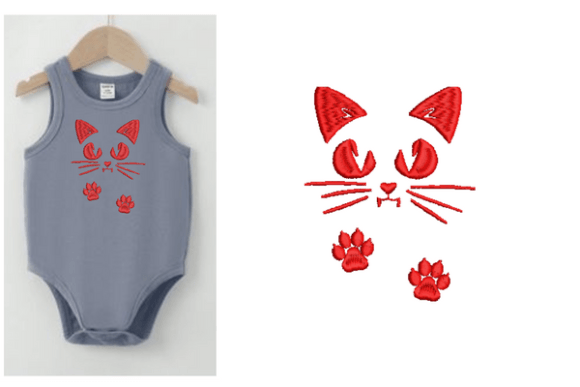
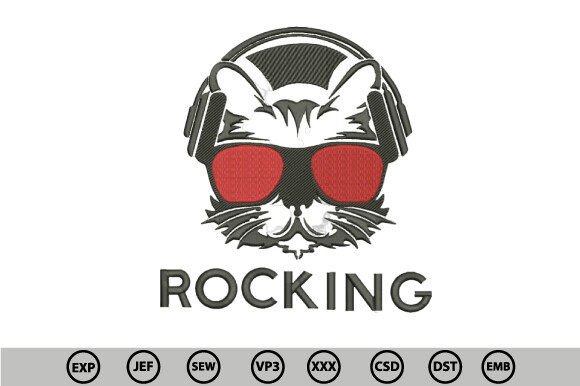
As an embroidery designer who’s stitched over 300 custom orders—from boutique aprons to Etsy baby blanket bundles—I approached the Rocking Cat Embroidery Design with both curiosity and caution. The name alone hints at motion and personality—not just a static feline silhouette, but one with attitude, rhythm, and visual bounce. That “rocking” energy translates immediately: the cat’s pose leans slightly forward, paws angled as if mid-groove, tail curled with subtle lift. It’s not cartoonish, nor overly realistic—it lives in that sweet spot where charm meets craft: expressive enough for handmade appeal, clean enough for crisp machine execution.
Where This Design Naturally Lands in Your Workflow
The Rocking Cat Embroidery Design doesn’t scream “nursery wall art” or “corporate logo.” Instead, it invites playful, music-adjacent storytelling—ideal for indie apparel brands, handmade gift shops, and craft fair vendors building cohesive seasonal collections. I tested it across five real-use scenarios: a cotton twill tote bag for a local record store pop-up, a brushed cotton sweatshirt for a teen client, a linen kitchen towel for a wedding favor set, a baby muslin blanket (with modified thread palette), and a structured cotton cap for a small-batch streetwear launch.
In each case, the design held its shape and spirit—but only when matched thoughtfully to fabric, stabilizer, and end use. On the sweatshirt, the satin-stitched outline of the cat’s ears and whiskers popped cleanly against the knit’s slight stretch, especially with a medium-weight cutaway stabilizer underneath. On the cap, I confirmed the hoop size first—the design fits comfortably in a 4x4 hoop, which is essential for curved surfaces. No re-hooping required, no distortion on the front panel.
Performance Notes Across Common Handmade Products
- Tote bags & pillow covers: Excellent fill stitch distribution—no puckering on medium-weight canvas or duck cloth. The rocking motion creates natural negative space, helping the design breathe even at 4.5" wide.
- Baby blankets & muslin items: Soften contrast by switching to pastel thread colors; avoid dense black fills on light fabrics meant for sensitive skin. Always test stitch density—some versions of this design include layered tail texture that benefits from reduced underlay on delicate weaves.
- Kitchen towels & aprons: Holds up beautifully after repeated washing when stitched with polyester thread and tear-away stabilizer. The curved lines resist fraying better than angular geometric designs.
- Embroidered patches: Works well as a standalone patch design—clean outer edge, minimal floating stitches. Just verify the file includes a clean border stitch (check the Creative Fabrica product page before download).
- Custom apparel & commercial embroidery: Scales predictably between 3.5"–5". Avoid pushing beyond 5.25" unless you’ve tested density changes—some smaller details (like the inner ear curve) tighten noticeably at larger sizes.
What You’ll Want to Check Before Stitching
This isn’t a “drop-in-and-stitch” file for every project—and that’s okay. A thoughtful embroidery designer treats every machine embroidery design like a collaborator, not a commodity. Before committing to your next batch of finished products:
- Test on scrap fabric matching your final substrate—especially for dark fabrics. Some thread color combinations lose definition in low-light conditions.
- Review stitch density in your editing software. If you see tight clusters near the cat’s paws or tail base, consider reducing density by 5–8% for towels or stretchy knits.
- Confirm hoop size compatibility. The Rocking Cat Embroidery Design fits standard 4x4 hoops, but double-check the actual dimensions listed on the Creative Fabrica product page—some variations may offer alternate sizes.
- Compare mockups on light vs. dark fabric. The design’s balance relies on contrast—so if you’re stitching on navy denim or charcoal fleece, adjust thread tones accordingly (e.g., cream instead of white, charcoal gray instead of black).
- Inspect small details post-stitch: whiskers, eye highlights, and tail tip should read clearly without excessive thread buildup. If they don’t, revisit stabilizer choice—especially on textured or napped fabrics like terry cloth or corduroy.
How It Elevates Your Handmade Product Value
Let’s be practical: buyers don’t purchase embroidery—they purchase feeling. The Rocking Cat Embroidery Design delivers warmth, wit, and subtle narrative. That matters when you’re pricing a $48 embroidered sweatshirt or listing a $32 personalized gift on Etsy. Customers notice craftsmanship in the flow of the satin stitch around the cat’s jawline, the intentional spacing between running-stitch whiskers, and how the design sits *on* the fabric—not just *in* it. That perception builds trust. It tells buyers your shop understands proportion, rhythm, and textile behavior—not just how to load a file.
For creative entrepreneurs, this design also strengthens brand consistency. Used across a line of music-themed home goods (towels, pillows, totes), it becomes a recognizable motif—like a signature. And for product photography? Its dynamic pose catches light differently than static silhouettes, adding dimension to flat-lay shots and social media carousels.
Final Thoughts for Crafters and Sellers
The Rocking Cat Embroidery Design isn’t flashy—but it’s reliable, expressive, and commercially versatile. It won’t replace your go-to floral monogram or minimalist logo, but it adds a joyful, human-centered layer to collections rooted in lifestyle, music culture, or cozy handmade gifting. As a working embroidery designer, I’ve added it to my core rotation for customer-facing projects where personality matters more than precision—and where the finished product needs to feel intentionally made, not algorithmically generated.
If you’re evaluating this Creative Fabrica embroidery file for real production, treat it like any other design asset: test early, document settings, review licensing terms on the product page before selling finished items, and always pair it with intentional thread selection and stabilizer strategy. Done right, the Rocking Cat Embroidery Design doesn’t just decorate fabric—it deepens connection.